
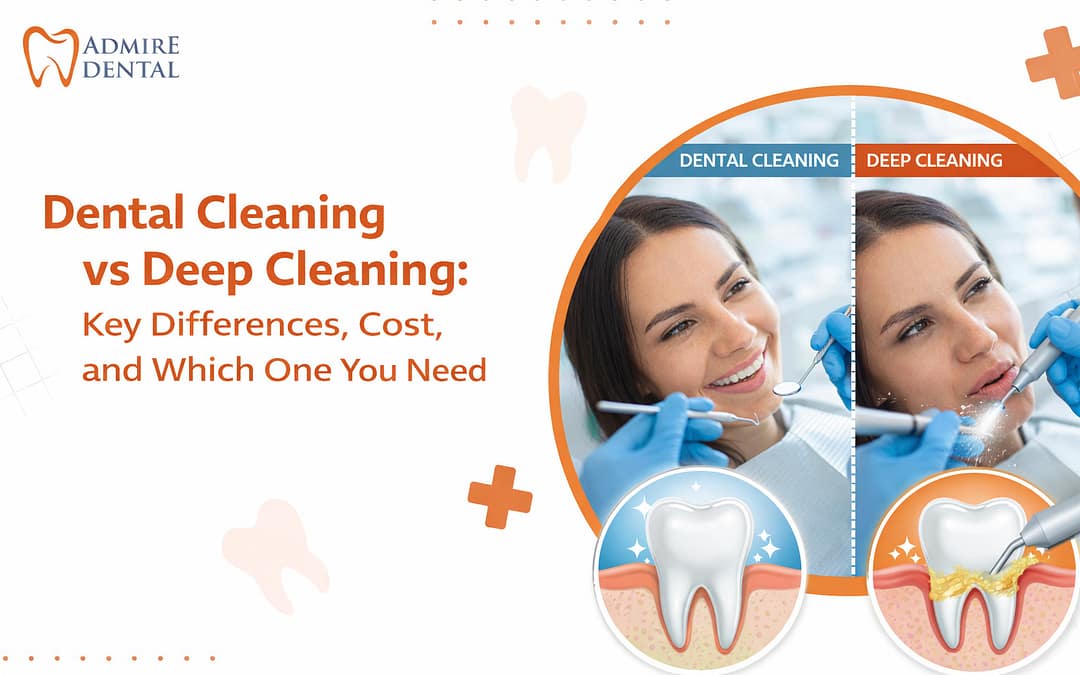
Most people don’t think much about dental cleaning vs deep cleaning, because both procedures involve removing plaque and tartar but serve very different purposes.
It’s a fair set of questions. The difference between a dental cleaning and a deep cleaning isn’t always explained clearly, and it matters more than most people realize. One is maintenance. The other is treatment. And knowing which one your mouth actually needs isn’t something you should have to guess at. Understanding dental cleaning vs deep cleaning helps patients know whether they need preventive care or treatment for gum disease.

The difference between dental cleaning vs deep cleaning is that a regular dental cleaning removes plaque and tartar above the gumline to maintain oral health, while a deep cleaning (scaling and root planing) removes bacteria and tartar below the gumline to treat gum disease.
If you’re unsure what to expect, especially as a new patient, here’s what happens during your first dental visit as an adult.
Dental Cleaning vs Deep Cleaning: What Is a Regular Dental Cleaning
In the discussion of dental cleaning vs deep cleaning, a regular dental cleaning is considered preventive care.A standard dental cleaning in Fall River — the kind most people get every six months — is called a prophylaxis. It’s preventive. The hygienist removes plaque and tartar buildup from the surfaces of your teeth and just below the gumline, polishes the teeth, and checks for anything worth monitoring.
The keyword there is preventive. This is for mouths that are basically healthy. Gums that are firm and pink and not pulling away from the teeth. Bone levels that are stable. No significant infection or active gum disease in progress.
It’s maintenance, the way changing your oil is maintenance. You don’t do it because something is broken. You do it so nothing breaks.
Dental Cleaning vs Deep Cleaning: What Is a Deep Cleaning
When comparing dental cleaning vs deep cleaning, deep cleaning is used to treat gum disease rather than simply prevent it.
A deep cleaning is a different procedure entirely. The clinical name is scaling and root planing, and it’s used when gum disease has already set in — specifically when bacteria and tartar have worked their way below the gumline and created what are called periodontal pockets. Those are the gaps between your gums and your teeth that form when the gum tissue starts to detach.
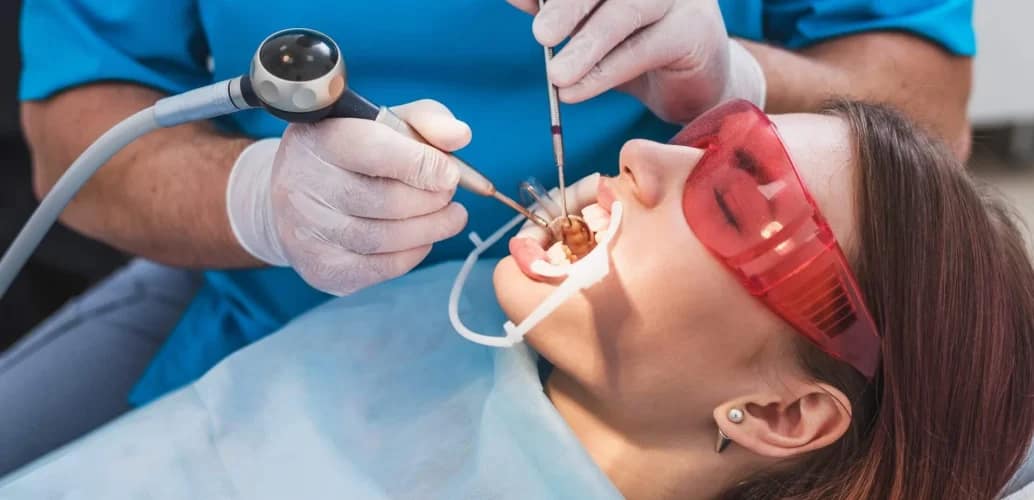
A regular cleaning doesn’t reach those pockets. It’s not designed to. Deep cleaning goes further — removing buildup from the root surfaces of the teeth, getting into those pockets, and smoothing the roots so bacteria have less surface area to cling to as the gum tissue heals and reattaches.
It’s usually done in two appointments, one side of the mouth at a time, and local anesthetic is used because going below the gumline that thoroughly is uncomfortable without it. This is one of the most important distinctions in dental cleaning vs deep cleaning.
How Dentists Decide Between Dental Cleaning vs Deep Cleaning
Dentists determine whether you need dental cleaning vs deep cleaning by measuring gum pocket depths.The main diagnostic tool is something called pocket depth measurement. During an exam, the dentist or hygienist will use a small probe to measure the depth of the space between your gums and your teeth at multiple points. Healthy pockets are 1 to 3 millimeters. Pockets at 4 millimeters warrant monitoring. Pockets at 5 millimeters or deeper, especially with bleeding and bone loss visible on X-rays, typically indicate gum disease and the need for a deep cleaning. These measurements help dentists clearly decide between dental cleaning vs deep cleaning treatments.
Other signs that point toward a deep cleaning rather than a regular one:
- Gums that bleed regularly when you brush or floss
- Gums that look like they’re pulling away from your teeth, making them look longer
- Persistent bad breath that doesn’t go away with normal hygiene
- Teeth that feel loose or like they’ve shifted slightly
- Visible tartar buildup below the gumline on X-rays
None of these alone is a guaranteed indicator, but a combination of them alongside clinical measurements usually tells a clear story.
How Often You Need Dental Cleaning vs Deep Cleaning
The standard recommendation is every six months for a regular dental cleaning. That’s the baseline for people with healthy gums and no significant history of periodontal disease. But “standard” doesn’t mean universal.
Some people genuinely do fine with once a year. Their plaque buildup is slow, their home hygiene is consistent, and their gum health stays stable. Other people — especially those who’ve had gum disease, who smoke, who have diabetes, or who just tend to build tartar quickly — may need to come in every three to four months.

After a deep cleaning, most patients are moved to what’s called a periodontal maintenance schedule — typically every three to four months — rather than going back to regular six-month cleanings. The gum disease doesn’t just go away permanently after treatment. It needs to be managed. The frequency of visits may vary depending on whether you need dental cleaning vs deep cleaning.
The “Is This Just a Upsell” Question
Many patients question recommendations because they don’t fully understand dental cleaning vs deep cleaning. It comes up. And it’s a reasonable thing to wonder about. Deep cleanings cost more. They take more time. And if nobody explained why it’s being recommended, it can feel like something being pushed on you rather than something you actually need.
Here’s how to think about it: ask your provider to show you your pocket depth numbers. Ask where the bleeding points are. Ask to see the X-ray and have someone explain what they’re seeing. A recommendation for a deep cleaning should come with actual clinical data backing it up — not just a general sense that your teeth look like they could use one.
If the numbers support it, it’s not an upsell. It’s a treatment recommendation for an actual condition. And gum disease that goes untreated doesn’t stay the same — it gets worse, and the consequences down the line, including tooth loss, are a lot more expensive and a lot harder to deal with.Clear clinical evidence should always explain why dental cleaning vs deep cleaning is being recommended.
What Happens If You Skip the Deep Cleaning
Ignoring the difference between dental cleaning vs deep cleaning can lead to worsening gum disease.Gum disease is an infection. Bacteria living in those periodontal pockets are actively damaging the tissue and bone that hold your teeth in place. A regular cleaning won’t touch them. Brushing and flossing more won’t reach them either — not once the pockets have formed.
In advanced cases, untreated gum disease can lead to tooth loss, requiring treatments like dental implants in Fall River.
Left alone, the pockets deepen, the bone continues to recede, teeth loosen. It doesn’t usually happen fast — it can take years — but it does happen. And at a certain point, the damage is irreversible. Bone doesn’t grow back on its own.
The earlier gum disease is treated, the better the outcome. A deep cleaning when pockets are at 5 or 6 millimeters has a very different prognosis than one attempted when things have progressed significantly further.This is why dentists emphasize early treatment when dental cleaning vs deep cleaning decisions are made.
If gum disease worsens and leads to severe pain or infection, you may need immediate care from an emergency dentist in Fall River.
The Bottom Line
A regular dental cleaning in Fall River is for healthy mouths. A deep cleaning is for mouths where gum disease has already started. They’re not the same procedure and they’re not interchangeable.
The question of which one is right for you comes down to what your gum health actually looks like — pocket depths, bleeding, bone levels on X-rays. That’s a conversation worth having with your dentist, with real numbers in front of you, so you understand what you’re dealing with and why.
Either way, the worst thing you can do is skip cleanings altogether. Whatever’s happening in your mouth right now, consistent professional care is always going to make it better than ignoring it.
Frequently Asked Questions
- What’s the difference between a cleaning and a deep cleaning?
A regular cleaning is preventive — it removes plaque and tartar from the tooth surfaces and just below the gumline for healthy mouths. A deep cleaning (scaling and root planing) is a treatment for gum disease, going below the gumline into periodontal pockets to remove buildup from the root surfaces. They’re different procedures for different conditions.
- How often should I get a dental cleaning in Fall River?
Most people with healthy gums should get a dental cleaning every six months. If you have a history of gum disease, you may need more frequent visits — every three to four months. Your dentist will recommend a schedule based on your specific gum health.
- Does a deep cleaning hurt?
Deep cleanings are done with local anesthetic, so you shouldn’t feel pain during the procedure. Afterward, your gums may be sore and sensitive for a few days, and there’s sometimes light bleeding. Over-the-counter pain relievers and gentle brushing usually manage post-procedure discomfort well.
- How do I know if I need a deep cleaning or a regular cleaning?
Your dentist will measure your gum pocket depths. Depths of 4mm or more, especially with bleeding and bone loss on X-rays, typically indicate gum disease requiring a deep cleaning. If your pockets are shallow and your gums are healthy, a regular cleaning is sufficient.
- Can gum disease come back after a deep cleaning?
Yes. Gum disease can recur, especially without consistent follow-up care. Most patients who’ve had a deep cleaning are moved to a periodontal maintenance schedule — typically every three to four months — to monitor gum health and prevent the disease from progressing again. Home hygiene habits matter a lot too.